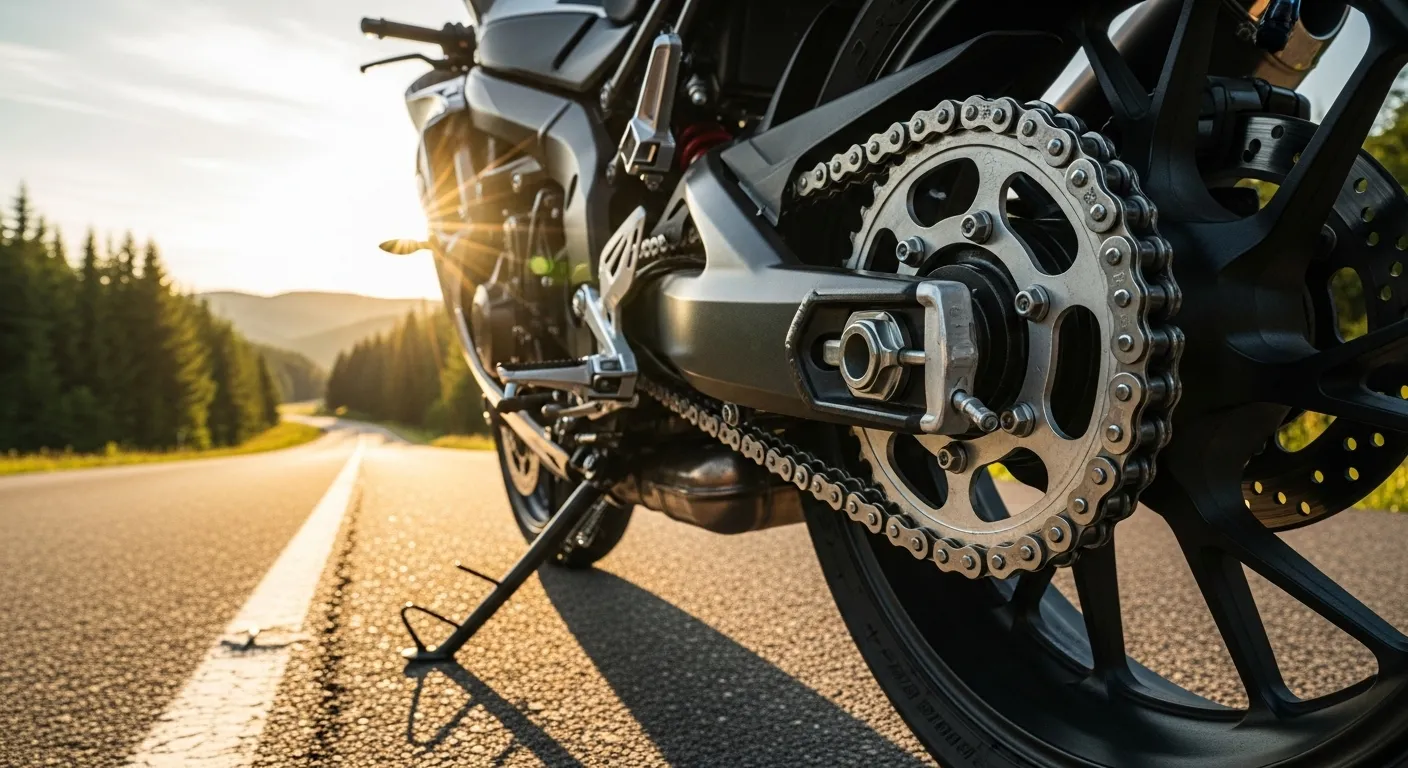
If you’ve been riding for a while, you already know — your motorcycle chain is like the heart of your machine. It takes every ounce of power from the engine and delivers it to the rear wheel. But here’s the catch: when it starts to wear out, it rarely screams for help. It whispers.
A faint rattling sound, a sudden jerk during throttle, or a small patch of rust — these may seem harmless at first. Yet, every seasoned rider knows that ignoring early chain symptoms can end in disaster — from power loss to a snapped chain that can wreck your gearbox or worse, throw you off balance mid-turn.
In this guide, we’ll break down 10 real-world signs that your motorcycle chain needs immediate replacement — the same clues professional mechanics and long-distance riders watch for.
1. The Chain Sounds Louder Than Your Engine
That buzzing, clinking, or metal-on-metal sound you’ve started hearing? It’s not just road noise. A worn-out chain starts creating a distinctive metallic rattle that rises and falls with your RPMs.
When your chain’s internal bushings wear down, it stops fitting tightly around the sprockets. That looseness is what causes the clatter.
Micro Opinion: A healthy chain never makes itself known — it just quietly does its job. The moment it starts “talking,” it’s asking for retirement.
2. Visible Rust or Dry Links
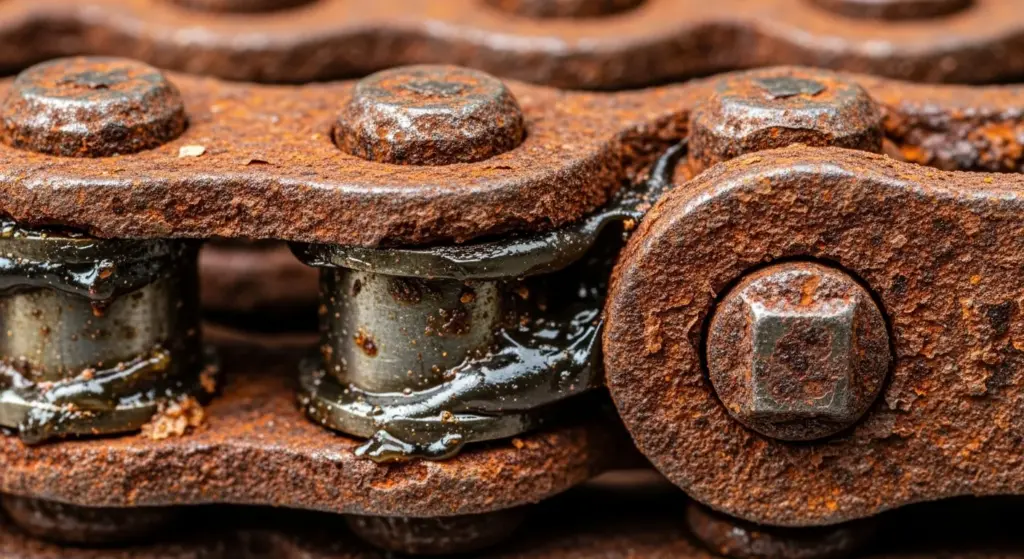
Riding through rain, washing your bike frequently, or parking in humid areas invites corrosion. Once rust appears, it doesn’t just look ugly — it eats into the pins and rollers, weakening the chain internally.
If you notice a reddish-brown film, dry spots, or links that refuse to flex, the chain’s lubrication layer is gone. It’s time to replace it before it seizes mid-ride.
Tip: Chains don’t die from rust overnight — they die because we ignore the first few spots.
3. Uneven Chain Slack (Tight Spots)
Rotate your rear wheel slowly and watch the chain tension. If it’s tight in one section and loose in another, that’s a clear sign of uneven stretch.
It happens when certain links wear faster than others — usually because of poor lubrication or a bent sprocket tooth. Uneven slack makes throttle response unpredictable and increases the risk of skipping a tooth at high speed.
Micro Opinion: The smoothness of your chain tells the story of your maintenance habits — or lack thereof.
If you’re curious about other motorcycle maintenance tips, check out our detailed guides in the Motorcycle Issues section.
4. Sprocket Teeth Look Hooked or Worn Down
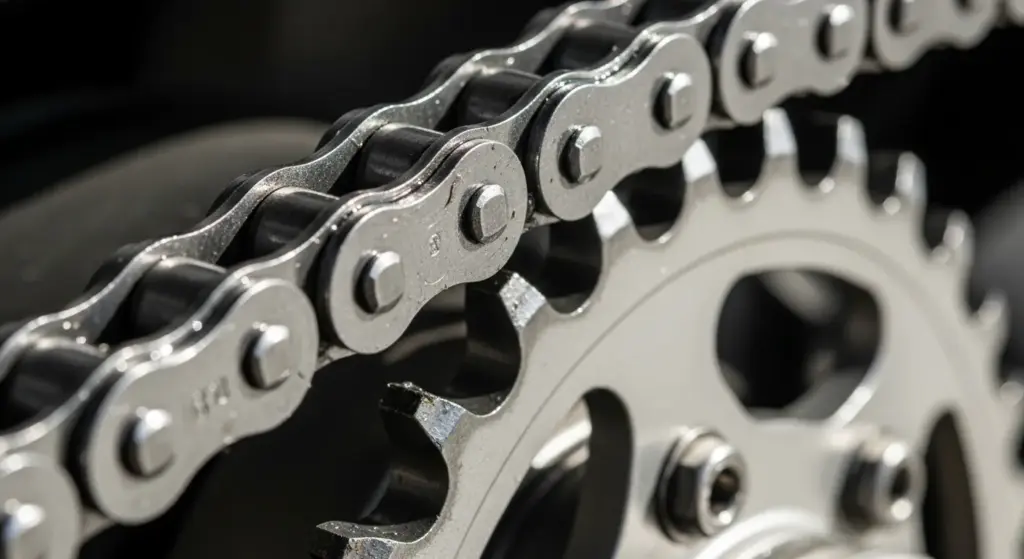
Even if your chain looks fine, the sprocket might be giving away the truth. Run your finger across the teeth — they should feel symmetrical and slightly rounded.
If they’re sharp, hooked, or leaning in one direction, that means your chain has been pulling unevenly. Replacing only the chain without changing the sprockets is like changing shoes but keeping old, uneven soles. They’ll ruin the new chain fast.
Always replace both together — chain and sprockets are a team.
5. Frequent Chain Adjustments Needed
If you find yourself adjusting the chain every few hundred miles, it’s already on borrowed time. A healthy chain maintains its tension for long stretches; a worn one keeps stretching.
Every extra adjustment is your cue that internal wear is reaching critical levels. Once the metal fatigues, no amount of tightening will help.
Micro Opinion: The more you adjust, the closer you are to replacement day.
Run your chain through your fingers (with gloves on, of course). If some links feel stiff or don’t bend smoothly, that’s a red flag. Stiff links throw off wheel balance, create noise, and eat into sprocket teeth.
A few stuck links can sometimes be revived with cleaning and fresh lube — but if more than a handful are frozen solid, the chain’s lifespan is over.
Think of it like a watch — one jammed gear throws off the whole mechanism.
Mechanic checking stiff motorcycle chain links.
7. You Notice Sudden Jerks During Acceleration
A smooth throttle should translate to smooth motion. But if your ride feels jerky or hesitant, it’s often because the chain is skipping slightly over the sprocket teeth.
This happens when the rollers or teeth are too worn to grip properly. It’s not just annoying — it’s dangerous. A single slip at high speed could snap the chain.
Micro Opinion: Smooth power delivery means smooth mechanics. Anything else means trouble brewing.
You can also browse through the Motorcycle Issues section for more real-world maintenance guides.
8. Chain Is Sagging Despite Proper Adjustment
If you’ve already adjusted the tension but the chain still sags when the bike’s on its stand, internal stretching is at play. The metal inside the chain links has thinned out over time — something you can’t fix with tools.
It’s like trying to fix an old rubber band; no amount of adjustment brings back the original elasticity.
9. You Feel a Vibration You Can’t Explain
Sometimes riders blame vibrations on the engine or tires — but a worn chain can cause its own unique buzz through the footpegs or seat.
If the vibration changes with gear shifts or chain tension, it’s a dead giveaway. A new chain often makes the entire bike feel smoother instantly.
10. You’ve Crossed 20,000 Miles Without Replacement
Even if your chain looks fine, time and distance wear it down. Most high-quality chains last 15,000–20,000 miles under normal use. Beyond that, metal fatigue, pin wear, and roller slack start taking over.
If your odometer’s hit that mark, replacing the chain is preventive care, not wasteful expense.
Micro Opinion: Chains are cheaper than hospital bills or gearbox rebuilds.
Bonus Tip: Always Replace the Chain and Sprocket Together
Mechanics will tell you — replacing just one is false economy. The worn sprocket will eat through your new chain much faster, and vice versa.
Think of it as a matched pair — replacing both ensures smoother power delivery and longer service life.
Maintenance Tips to Extend Chain Life
Maintenance Task
Frequency
Why It Matters
Clean & Lube Chain
Every 300–400 miles
Prevents rust and friction
Check Chain Slack
Every 500 miles
Maintains smooth power transfer
Inspect Sprockets
Every 1,000 miles
Detects wear early
Replace Chain & Sprocket Set
Every 15,000–20,000 miles
Avoids mechanical failure
Keeping up with this routine not only saves you money but also enhances safety — especially if you often ride highways or off-road trails.
When to Get Professional Help
If you’re unsure whether your chain’s gone bad, have a trusted mechanic inspect it. Most workshops can measure chain elongation precisely — anything beyond 2% stretch means it’s time for replacement.
At that point, even the best lubricant won’t bring it back.
You can also browse through the Motorcycle Issues section for more real-world maintenance guides.
Final Thoughts
A motorcycle chain rarely fails without warning — riders just fail to notice. The good news? Once you learn to spot these signs, you’ll never get caught off guard again.
Replacing your chain before it fails isn’t just about maintenance — it’s about trust. Trust in your machine, and in your ability to listen to it.
If you’ve been waiting for a sign to upgrade your chain — this is it.