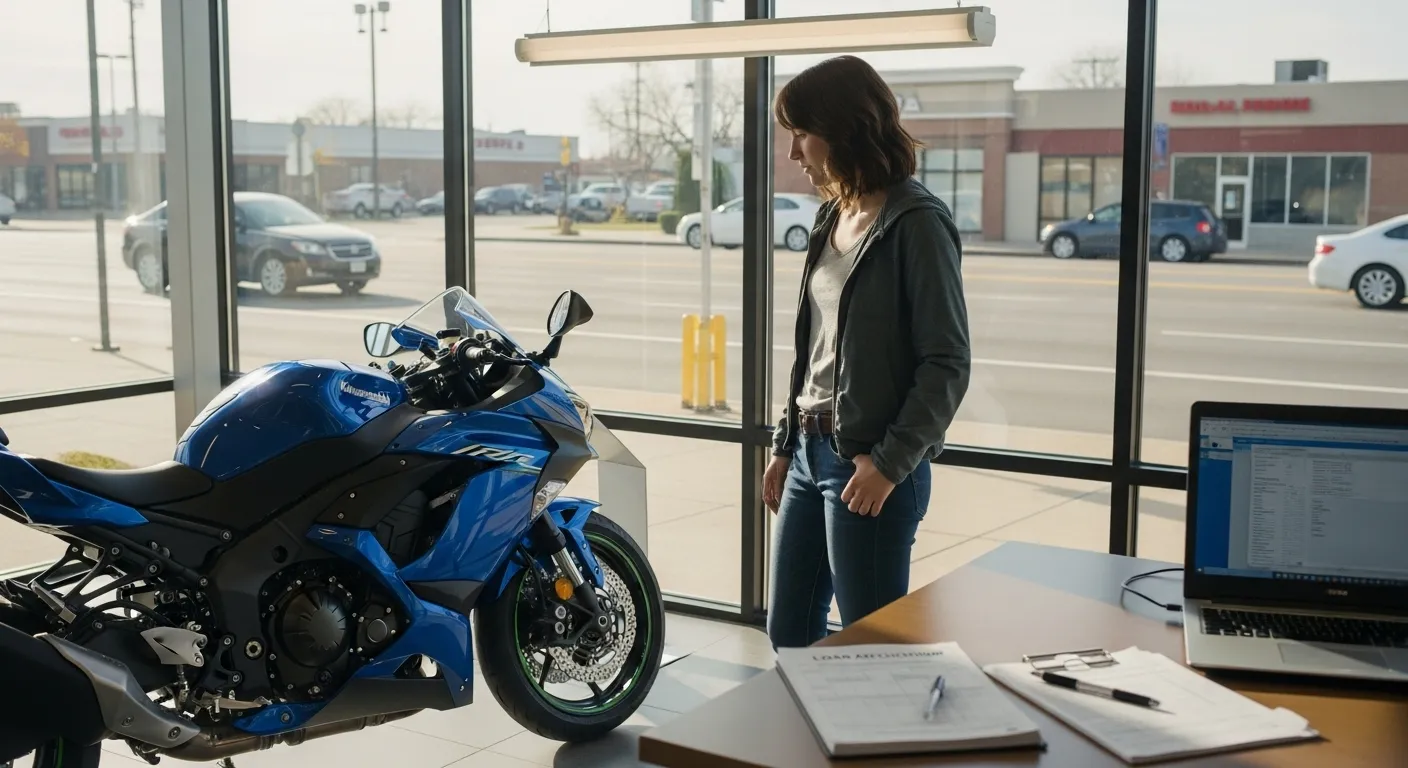
There’s a quiet excitement that builds when you’re about to buy your first motorcycle.
It’s not just about horsepower or design—it’s about freedom. That early morning commute without traffic, that weekend highway escape, that first time you lean into a corner and realize this is what you’ve been missing.
But before you can twist that throttle, reality sets in: motorcycles cost money, and paying upfront isn’t always an option. That’s where smart financing comes in.
The good news? Motorcycle loans in 2025 are more flexible, accessible, and beginner-friendly than ever before. Whether you’re buying your first sportbike, cruiser, or adventure tourer, this guide walks you through every financing path, what to expect, and how to avoid rookie mistakes.
💬 Why Financing Your First Motorcycle Is a Big Deal
If you’re new to motorcycling, you’re also likely new to credit-based purchases. And that makes motorcycle financing both exciting and intimidating.
Motorcycles are treated differently from cars by lenders. Most banks classify them as “recreational vehicles,” which means slightly higher interest rates and stricter loan terms. Yet, the market’s changing—fast.
In the U.S. and UK, lenders are now offering programs specifically designed for first-time buyers. Credit unions, online lenders, and even motorcycle manufacturers have started focusing on new riders who don’t have extensive credit history.
💭 Here’s the reality: getting approved isn’t about luck—it’s about understanding what lenders actually look for.
They care about:
- Your credit score (usually 600+ preferred)
- Your employment stability
- Your loan-to-value ratio (how much you borrow vs. what the bike’s worth)
That’s it. If you can manage those three, your first ride is closer than you think.
⚙️ 1. The Main Motorcycle Financing Routes Explained
When you walk into a dealership or browse a listing online, you’ll usually face four main financing paths. Each comes with its own strengths—and traps.
🏁 A. Dealership Financing: Easy, but Read the Fine Print
Most new riders go this route because it’s simple: walk into a dealership, choose a bike, sign the papers, and ride home the same day.
Dealerships often partner with companies like Harley-Davidson Financial Services, Honda Financial, or Yamaha Motor Finance.
✅ Advantages:
- Instant approval process (sometimes within hours)
- Occasional 0% APR or cashback promotions
- Simplified paperwork—handled in one place
❌ Downsides:
- Dealers often add “finance reserve” markups to interest rates
- You might be locked into dealer-selected lenders
- Early payoff penalties are sometimes hidden in small print
💬 Editorial opinion: Dealership financing feels convenient, but it’s rarely the cheapest. Think of it as “fast food finance”—quick and easy, but not always healthy for your wallet.
If you’re a first-timer, don’t sign on your first visit. Compare rates with your local credit union before making a decision.
💳 B. Bank or Credit Union Loans: Best for Long-Term Value
This is the most stable and trustworthy path for most first-time buyers. If you already have a checking or savings account with a local bank or credit union, start there.
✅ Advantages:
- Lower average interest rates (as low as 5–7% APR for good credit)
- Transparent terms and customer service
- Can finance new or used motorcycles
❌ Downsides:
- Application process can take 1–2 business days
- Requires a stronger credit profile or co-signer
💭 Human insight: Credit unions often go easier on young or first-time borrowers. They look at your potential, not just your credit score.

🏢 C. Manufacturer Financing: For Brand-Loyal Riders
Manufacturers like Honda, Indian, Harley-Davidson, and Kawasaki offer their own branded financing. This works well if you’re buying a new model directly from an authorized dealer.
✅ Advantages:
- Seasonal low-APR programs (as low as 3.99% for select bikes)
- Incentives for loyalty and accessories
- Easier approval for first-time buyers
❌ Downsides:
- Limited to that specific brand
- Doesn’t apply to used motorcycles
💬 Real-world note: If you’re buying a 2025 model, look out for spring or year-end promos—that’s when most brands push low-interest or zero-down offers.
🌐 D. Online Lenders & Personal Loans: The Flexible Route
Online financial platforms have become a game changer. Companies like LightStream, Upgrade, and LendingTree allow you to apply for a motorcycle loan completely online—no dealership involvement needed.
✅ Advantages:
- Fast approvals, sometimes same-day
- Works great for used bikes or private sales
- Loan funds are sent directly to you
❌ Downsides:
- Higher interest (typically 9–14%)
- Requires a solid credit profile
💭 Pro tip: If you’re buying from a private seller on Facebook Marketplace or Craigslist, an online personal loan is often your best bet.
💰 2. Understanding Interest Rates, Terms & Payments
Before signing anything, it’s crucial to know what kind of rates you’re walking into. In 2025, here’s what most riders in the U.S. are seeing:
| Credit Score | Average APR | Loan Term | Down Payment |
|---|---|---|---|
| 750+ (Excellent) | 4.99% – 6.99% | 48–60 months | 10% or less |
| 650–749 (Good) | 7.49% – 10.99% | 48–60 months | 10–20% |
| 550–649 (Fair) | 11.49% – 16.99% | 36–48 months | 20–25% |
| Below 550 | 18% – 22% | 24–36 months | 25%+ |
💭 Micro-opinion: One of the smartest things you can do is spend three months improving your credit before applying. That 1–2% APR difference could save you hundreds of dollars.
🧾 3. Down Payments, Trade-Ins & Smart Savings
Putting down a 10–20% down payment not only improves your approval odds—it can also lower your total interest over time.
Here’s what most first-time buyers don’t realize: trade-ins count.
If you have an older commuter bike worth $1,000–$2,000, that value can reduce your loan amount instantly.
💬 Example:
Let’s say your dream motorcycle costs $8,500.
You trade in your old 150cc for $1,200 and add a $1,000 down payment. Now you’re financing only $6,300—a difference that can cut your monthly EMI by nearly $40.
(Internal link: You can read more smart budgeting tips in the Finance section.)
📊 4. The Role of Credit Scores (and What to Do if You Have None)
New riders often ask, “Can I get a motorcycle loan with no credit?” The short answer: yes—but with conditions.
Lenders will likely:
- Ask for a co-signer (a parent, friend, or spouse)
- Require higher down payments (up to 25%)
- Offer shorter loan terms (24–36 months)
💭 Human insight: Don’t fear the co-signer route. If you make timely payments, it actually helps build your credit history—and soon, you won’t need one.
(Internal link: For credit-building tips, visit our Motorcycle Issues guides.)
🚫 5. Hidden Fees & Fine Print You Should Never Ignore
Motorcycle loans often include fees that aren’t obvious at first glance. Before signing, ask your lender or dealer about:
- Origination fees (1–3% of the loan amount)
- Documentation charges
- Prepayment penalties (yes, some lenders charge if you repay early)
- Mandatory insurance add-ons
💭 Reality check: Always ask for the “out-the-door” cost, not just the sticker price.
Dealers sometimes roll extended warranties or tire protection plans into your loan—sounds nice, but it inflates your balance and increases your interest.
🗓️ 6. Best Time of Year to Finance a Motorcycle
Timing matters. Most U.S. dealerships clear stock between September and December, right before the new model-year arrivals. That’s when you’ll see the best incentives and rate drops.
Spring brings excitement and new models—but fewer deals.
💬 Editorial tip: If you can wait until late fall, do it. You might grab a 2024 model at a 10–15% markdown with better financing terms.
🧠 7. Financing Habits That Separate Smart Riders from the Rest
Getting a loan approved is just the beginning. Managing it well builds your reputation as a reliable borrower—opening doors to better rates for your next upgrade.
Here’s how smart riders handle it:
- Set up auto-pay to never miss a payment.
- Keep your loan term under 60 months—longer terms mean higher interest.
- Refinance after 12 months if your credit improves.
💭 Personal insight: Many riders who manage their first loan responsibly move up to touring bikes or even EV motorcycles within two years.
🧩 8. Real-World Example: A First-Time Buyer’s Journey
Let’s imagine Jake, a 26-year-old from Arizona. He’s been eyeing a used Kawasaki Ninja 400 priced at $6,000.
- His credit score is 670 (good)
- He puts down $1,000
- He applies through his credit union
Jake gets approved for a 5-year loan at 7.99% APR. His monthly payment? Around $122.
Had he chosen a dealership loan at 10.99%, that payment jumps to $136—a $14/month difference that adds up to nearly $850 extra over five years.
💬 Lesson: Shopping around pays off—literally.
🏁 Final Thoughts: Your First Ride, the Smart Way
Owning your first motorcycle isn’t just about speed—it’s about making a decision that sets you up for years of stress-free riding.
If you’re serious about becoming a lifelong rider, treat financing like you treat your safety gear: research it, understand it, and don’t settle for what’s convenient.
So before signing any paperwork, remember:
- Compare rates from at least two lenders
- Check your credit score and improve it if needed
- Avoid “too-good-to-be-true” dealership offers
- Consider trade-ins and seasonal discounts
👉 For more insights, explore our Finance and Motorcycle categories on RideTrailBlaze.com—your go-to resource for real-world riding advice, price trends, and new model updates.
If you’ve been waiting for a sign to finally buy your first bike—this might just be it.