
🏍️ “The heat hits harder on two wheels.”
Every rider knows that feeling — you’re cruising down an open stretch, the sun blazing above, and suddenly your engine starts feeling a little too warm for comfort. It’s that subtle shift between normal warmth and the first signs of trouble: power dips, a faint burning smell, or the dreaded temperature light flickering red.
Summer is the season for long rides, but it’s also the season that tests your bike’s limits. And when your motorcycle starts overheating, it’s not just a comfort issue — it’s a warning your engine is whispering before it screams.
This isn’t about quick fixes. It’s about understanding why motorcycles overheat, how to spot the signs before things get critical, and what you can actually do to prevent long-term damage.
1. When the Heat Becomes the Enemy
Summer riding feels like freedom — until it doesn’t. Engines are built to run hot, but every machine has a breaking point. When temperatures climb past 100°F and you’re stuck in slow traffic or climbing a steep hill, your motorcycle’s cooling system is pushed to its limit.
Engines rely on air or liquid cooling to regulate heat. But in hot conditions, that delicate balance shifts. Oil thins out faster, air coolers can’t dissipate heat effectively, and radiators work overtime.
If you’ve ever felt the heat radiating off your legs at a stoplight, that’s your motorcycle’s cry for help — and it’s trying hard not to boil over.
2. Recognizing the Early Signs of Overheating
An overheating motorcycle doesn’t always blow steam right away. Often, it’s a slow build-up that riders miss until it’s too late.
Here’s what you’ll notice first:
- Loss of power: the throttle feels dull, and acceleration weakens.
- Ticking or knocking noises: that’s metal parts expanding under excessive heat.
- Temperature warning light: a clear red flag, literally.
- Burning smell: overheated oil or plastic components starting to degrade.
- Rough idling: the bike struggles to maintain consistent RPM.
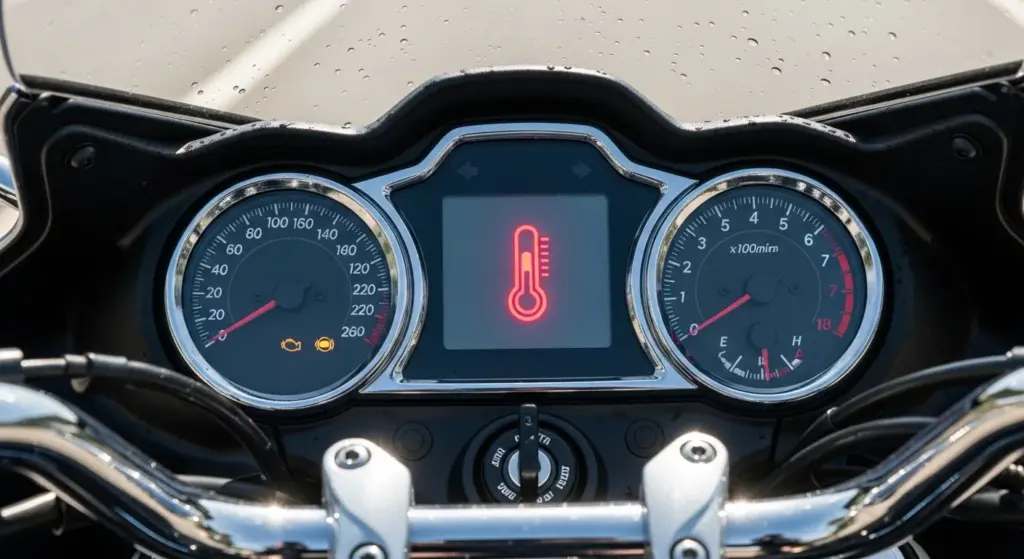
“If you feel your engine’s heat before you see it on the gauge, you’re already past the halfway mark.”
A small tip — if your clutch or throttle suddenly feels ‘sticky’, it’s often because components are expanding from heat.
3. Common Causes Behind Motorcycle Overheating
Let’s break down what’s really happening under that tank. There’s always a root cause, and diagnosing it early can save you a costly repair.
a. Low or Old Coolant
Coolant isn’t forever. Over time, it loses its ability to transfer heat efficiently. If it’s been more than two years, it’s time to flush it out.
b. Poor Airflow
In summer traffic, airflow is minimal — especially on air-cooled bikes. Long idling in stop-and-go traffic or riding at low speeds can trap heat inside.
A simple trick: take short breaks in shaded spots to let the engine breathe.
c. Dirty Radiator Fins or Oil Cooler
Dust, bugs, and grime can clog the fins, blocking heat dissipation. Cleaning them with gentle compressed air can make a night-and-day difference.
d. Wrong Engine Oil
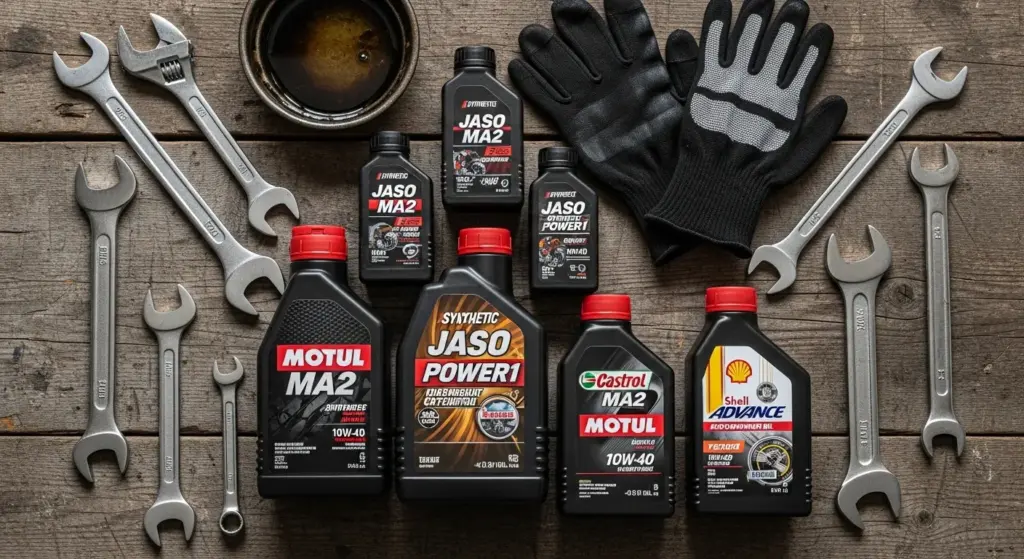
Using oil not rated for high temperature (non-synthetic or wrong viscosity) is like sending your engine to war without armor.
Always check for JASO MA2-certified motorcycle oils that handle summer abuse.
e. Faulty Thermostat or Water Pump
These are the hidden culprits. If the thermostat sticks closed or the pump fails, coolant circulation stops — and heat builds rapidly.
4. Diagnosing the Issue Like a Pro
Now that you know what could go wrong, here’s how to methodically diagnose overheating before calling your mechanic.
Step 1: Visual Check
Look for coolant leaks around the radiator cap, hoses, or water pump. Even a few drops can mean pressure loss.
Step 2: Listen to the Fan
Turn on the ignition after a short ride. The radiator fan should kick in automatically. If not, check the fuse and fan motor.
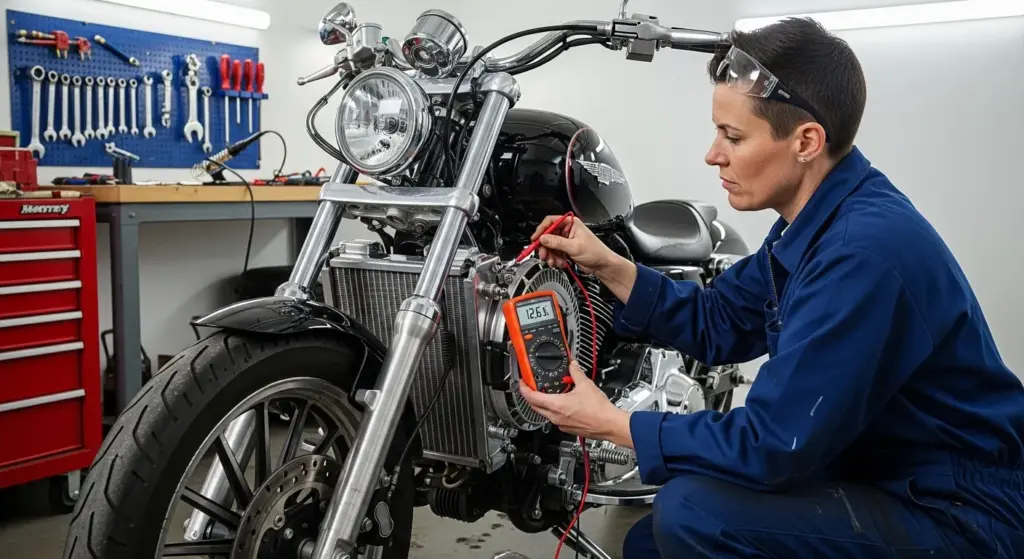
Step 3: Check Oil Color and Level
Dark, burnt-smelling oil means it’s losing viscosity and isn’t cooling effectively. Replace immediately.
Step 4: Inspect Airflow
If you ride an adventure or touring motorcycle, make sure the skid plate or fairing isn’t blocking air circulation.
5. Real-World Scenarios: Why It Happens More in Summer
Riding in hot climates like Texas, Nevada, or even southern Australia brings an extra layer of challenge.
The ambient temperature adds to the engine’s internal heat, and long rides under direct sunlight cause components to expand faster.
“A 95°F day doesn’t just feel hotter on the road — it’s a heat multiplier for your bike.”
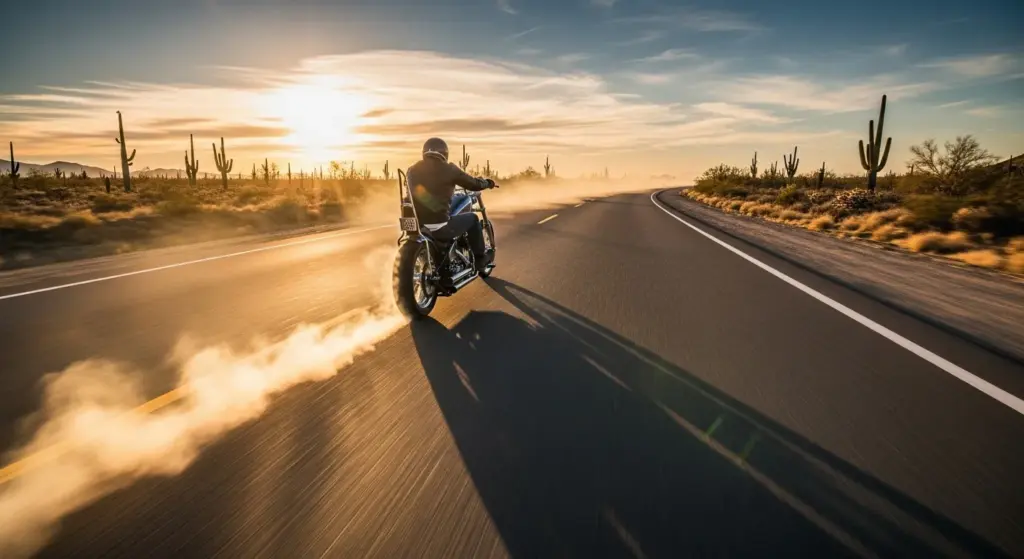
Even top-end motorcycles like the BMW GS or the Harley Street Glide can show rising temps if airflow or coolant efficiency drops.
If you own a liquid-cooled machine, regular coolant checks and radiator cleaning are non-negotiable.
For air-cooled bikes, avoid long idling — the engine literally relies on wind to stay alive.
6. Preventive Measures That Actually Work
Let’s be honest — most riders don’t think about cooling systems until the warning light appears.
But prevention is simple if you treat your motorcycle like an athlete: hydration and airflow are everything.
✅ Use High-Quality Coolant & Synthetic Oil
Replace your coolant every 12–18 months and switch to full synthetic oil before summer begins.
✅ Clean the Radiator & Oil Cooler
Use gentle compressed air, not a pressure washer. It’s about airflow, not force.
✅ Don’t Idle Too Long
If stuck in traffic for more than 5 minutes, turn off the engine and wait.
✅ Park Smart
Avoid asphalt parking in direct sun — surface heat radiates back into the engine.
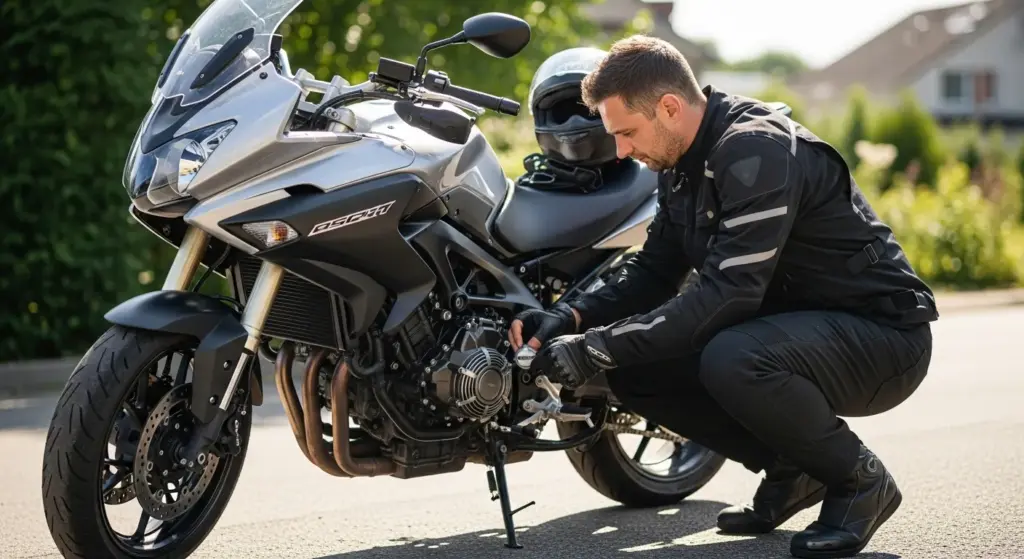
✅ Inspect the Fan & Thermostat Regularly
A faulty fan relay is one of the most overlooked reasons for heat buildup.
7. Riding Tips for the Scorching Months
Riding smart is as important as maintaining smart.
- Wear vented riding gear — it helps you stay cooler, reducing fatigue and better reacting to heat issues.
- Schedule rides early morning or late evening.
- Carry a small coolant bottle on long rides — yes, it can save you in remote areas.
- Keep a spare fuse and small toolkit handy for fan or light issues.
For those planning motorcycle camping or long trips, check our in-depth guide in the Motorcycle Camping section — it covers how to prepare your bike for multi-day heat exposure and terrain shifts.
8. When to Seek Professional Help
If your motorcycle consistently overheats even after basic fixes — it’s time for a professional inspection.
Mechanics can pressure test the cooling system, inspect head gaskets, and verify that internal passages aren’t clogged.
Ignoring chronic overheating is risky. It can lead to warped cylinder heads, blown gaskets, or even complete engine seizure.
Think of it as spending $100 now to save $1000 later.
9. The Human Side of Heat Management
Every summer, thousands of riders across the U.S. face this same battle with the sun.
It’s part of the ride — the endurance, the awareness, the respect for the machine that carries you.
“The difference between a good rider and a great one is how well they listen — not just to the road, but to their engine.”
Your motorcycle isn’t just overheating for no reason. It’s talking to you in temperature, in vibration, in subtle changes only you can feel.
Learn that language, and your engine will reward you with reliability mile after mile.
🏁 Final Thoughts
Motorcycle overheating in summer isn’t just a technical issue — it’s a seasonal reality that every rider faces.
But it’s also preventable with awareness, maintenance, and the right riding habits.
So, before your next summer trip, give your bike the care it deserves.
Because sometimes, the best way to beat the heat isn’t to fight it — it’s to ride smarter with it.